Showing posts with label Echinodorus palaefolius. Show all posts

Tuesday, January 12, 2016

Mexican Sword Plant and Flower Fly

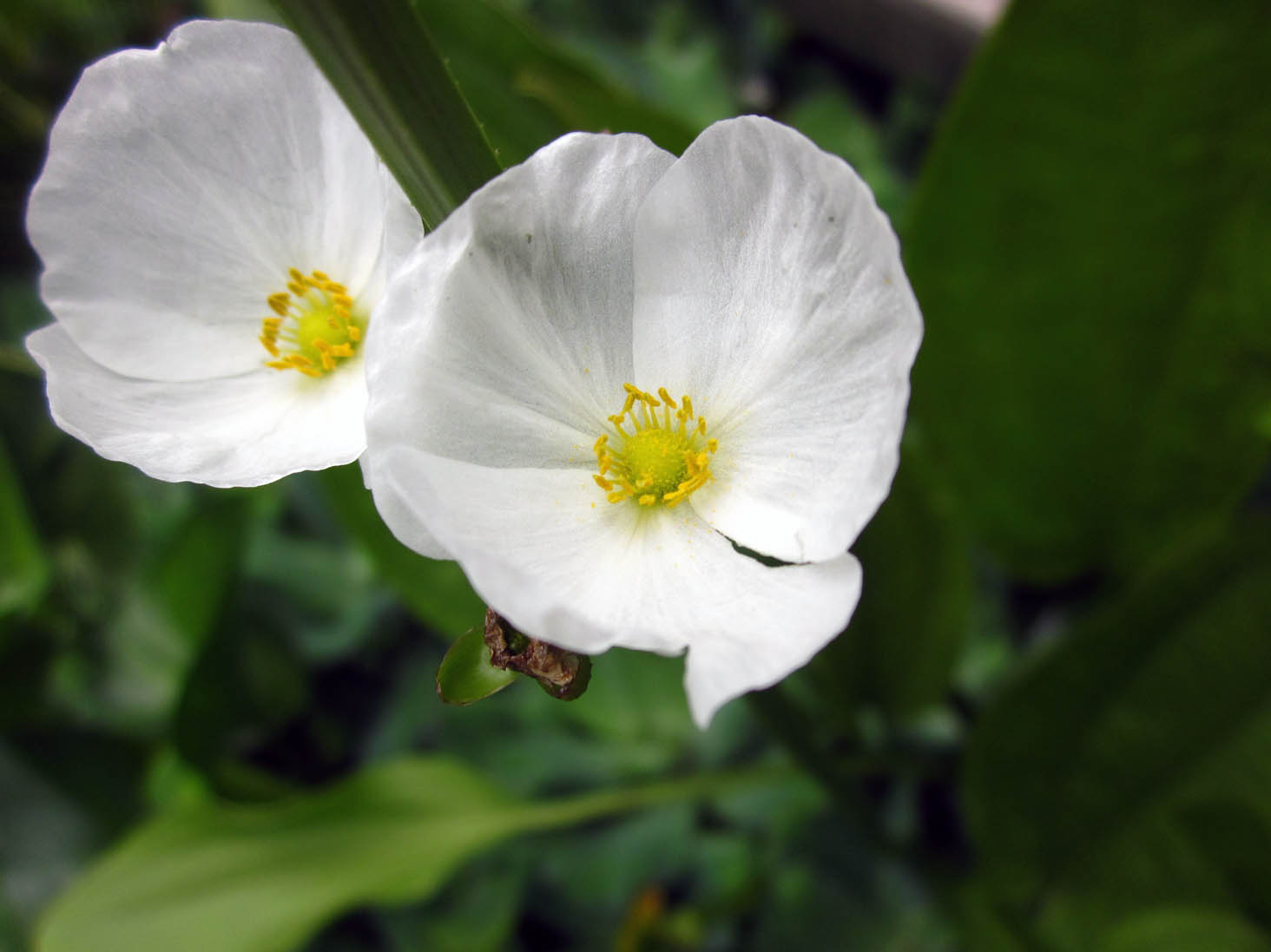
Echinodorus palaefolius (Mexican Sword Plant) is an aquatic plant though it can thrive on damp or muddy soil. I planted them in containers without drainage holes.

 
The long spikes carry clusters of round buds at intervals on its nodes.

Cascades of flowers bloom from the long flower spikes. The next day another fresh crop will take its place.


With many generations of plantlets growing from the container, its time to consider re-potting. The leaves are now about one third its original size. The large leaves of the Calathea lutea is seen in the background.


Masses of blooms produce the effect of a bridal bouquet.


Its a magnet for both bees and flies.


This is a Flower fly or Hover fly (Eristalinus aeneus).


It is hard to tell whether it is gathering pollens or imbibing nectar.


After the snacking, it was time to enjoy the view below.

 
Another type of Flower fly (Eristalis) approach this treasure trove of entomological epicurean delights.


Thick clusters of Echinodorus palaefolius in a container next to my letter box.


Thursday, July 10, 2014

Busy As A Bee

Its no wonder the phrase "busy as a bee" was coined. Whenever the flowers in my garden are in bloom, honey bees (Apis mellifera)  jet in, making a beeline for their favourites.

To get at the sweet nectar of these portulaca grandiflora blooms, they can curve, contort and assume all sorts of posture.


The pristine white flowers of Echinodorus palaefolius (mexican sword plant) provide numerous opportunities for them to imbibe.

Double-petaled Quisqualis indica (Rangoon creeper) exude a delicate fragrance to ensure their visitation.

The flowers of Cuphea hyssopifolia (Mexican Heather) are tiny, but they made up for it in numbers. 

They scramble over the filaments of Calliandra emarginata (Dwarf Red Powder Puff) to get at the nectar located at their bases.

This is a smart cookie as it go through the "back door" to have the goodies without having to return the favour of spreading the pollens.


Tuesday, May 27, 2014

Ladybirds on Mexican Sword Plant

From my observation, Ladybirds that come visiting to my garden come in four patterns on their hard cuticles. There could probably be many other types. The Mexican Sword Plant (Echinodorus palaefolius) is one of their favourite destinations as aphids love to congregate there too.


This type go for minimalism aka 'Plain Jane'.


Another type jazzes up its coat with some circular markings which can vary in numbers. This one has 10 polka dots.


Here's another lady bug with a stripy design instead of the discrete spots, giving the appearance of a red zebra of the ladybird world.


Yet another species did not want to stay mainstream and had stripes which join up forming a net like pattern or a red tortoise shell.


AFTER A HEAVY SHOWER
Several ladybugs were washed down into the murky waters. Some were saved in time but there were some that drowned. I saw a few struggling on the surface of the water and picked them up. 
This one was flailing in the water on the same spot. As it did not make any progress to the plant. I lifted it up and ...


placed it on the surface of the leaf. After a while, it started to walk along the edge of a leaf.


They love to walk precariously on the leaf margin, so its no wonder that they easily toppled over into the water. It is strange for this mishap to occur as  they are perfectly capable of flight.

The ladybugs seemed to be voracious eaters as by the next day almost all the aphids were gone.

After the feast, it was time for some tomfoolery. As it is conjugation of plain and spotted, I wonder how the offspring will turn out to be; probably one with fewer spots.


A puny little snail came out to explore the world too.


A budding flower stalk.


Cascading flowers of the Echinodorus palaefolius (Mexican Sword Plant).


The tall Bucida tree nearby was reflected on a water drop.


Thursday, April 26, 2012

Echinodorus palaefolius - Mexican Sword Plant

This aquatic plant thrives happily in clayey soil. Long pendulous spikes of flowers are produce continously. They last for many months and eventually form many branches. The flowers are pure white and last for half a day.

 
It is magnet for dragonlies. 

 
Stamens form a ring round the centre.
An ant has a field day scrambling around.

Delicate pure white flowers are borne along the whole length of the floral spikes.

I planted this pot solely from the plantlets form on the floral spikes. They grow freely and wildly and in no time fill up this big pot. I have since pruned it down substantially as the dense vegetation encouraged colonisation of mealybugs.

LinkWithin

Related Posts Plugin for WordPress, Blogger...